
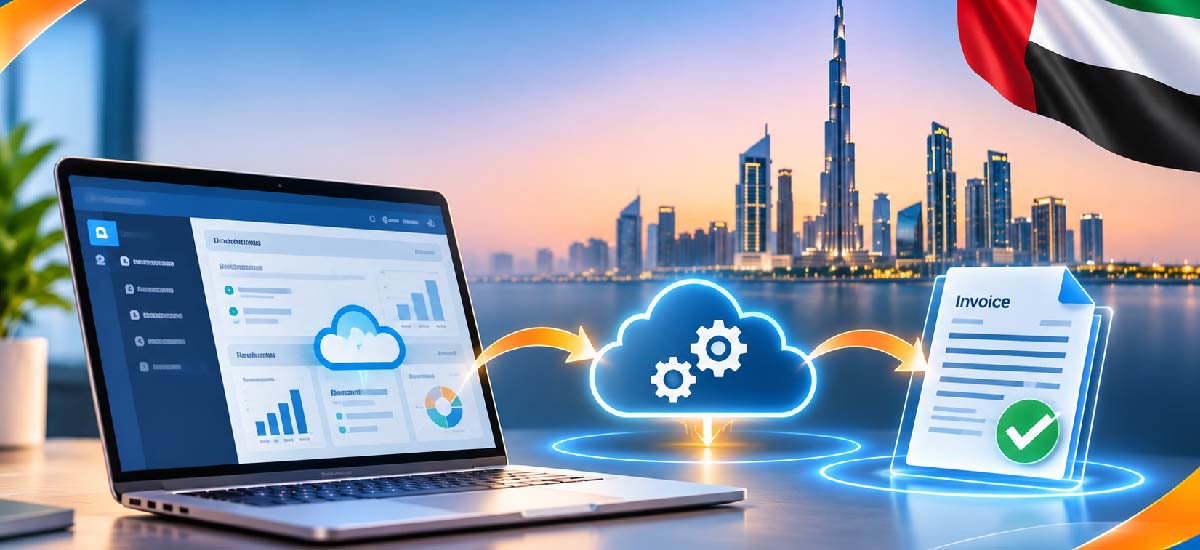
The United Arab Emirates is moving towards a more digitally connected business environment with the introduction of its mandatory Electronic Invoicing (e-Invoicing) System. This initiative aims to modernize invoicing processes, improve tax transparency, reduce manual paperwork, and strengthen compliance across businesses operating in the UAE.
For companies using Oracle NetSuite ERP, integrating e-Invoicing capabilities into their existing financial and operational workflows can make this transition easier. With the right NetSuite integration strategy, businesses can automate invoice generation, exchange structured electronic invoices, improve financial visibility, and support UAE regulatory requirements.
Dynasoft Cloud, an experienced Oracle NetSuite Alliance Partner in the Middle East, helps businesses implement, customize, and integrate NetSuite solutions to support digital transformation and evolving business requirements.
What Is UAE e-Invoicing?
UAE e-Invoicing is a government initiative that requires businesses within its scope to issue, exchange, and report invoices electronically using a standardized structured data format.
Unlike traditional PDF invoices, scanned documents, or invoices sent through email, an e-Invoice contains structured data that can be automatically processed and exchanged between business systems.
The UAE’s e-Invoicing framework is based on the Peppol network and a decentralized five-corner model. It enables suppliers and buyers to exchange electronic invoices through Accredited Service Providers (ASPs), while the required tax data is reported to the Federal Tax Authority (FTA).
The system is designed to:
- Improve tax transparency and reporting accuracy.
- Reduce manual invoice processing.
- Minimize errors and administrative costs.
- Strengthen VAT compliance.
- Improve business-to-business (B2B) and business-to-government (B2G) transactions.
- Support the UAE’s digital economy.
UAE e-Invoicing Implementation Timeline
The UAE Ministry of Finance has introduced a phased implementation approach to help businesses prepare for mandatory e-Invoicing.
The implementation requirements differ according to annual business revenue and entity type.
| Business Category | ASP Appointment Deadline | Implementation Date |
|---|---|---|
| Businesses with annual revenue of AED 50 million or more | 30 October 2026 | 1 January 2027 |
| Businesses with annual revenue below AED 50 million | 31 March 2027 | 1 July 2027 |
| Government entities | 31 March 2027 | 1 October 2027 |
The pilot programme commenced in July 2026 with selected taxpayers.
Businesses should review the latest Ministry of Finance requirements, select an appropriate Accredited Service Provider, and begin preparing their ERP systems well ahead of their applicable implementation dates.
Why Integrate UAE e-Invoicing with NetSuite ERP?
Oracle NetSuite is a cloud-based ERP platform that helps businesses manage financial operations, sales, procurement, inventory, and reporting through a centralized system.
Integrating UAE e-Invoicing capabilities with NetSuite allows businesses to connect their existing invoicing processes with the electronic invoicing ecosystem.
Instead of manually preparing invoices and transferring information between different platforms, companies can establish an automated workflow between NetSuite and their selected e-Invoicing Service Provider.
Key Benefits of NetSuite e-Invoicing Integration
| 1. Automated Invoice Generation | 2. Structured Electronic Invoice Exchange | 3. Improved Financial Accuracy | 4. Faster Invoice Processing | 5. Better Tax Reporting Visibility | 6. Centralized Business Operations |
| Generate invoice information directly from NetSuite transactions, reducing repetitive data entry and manual invoice preparation. | Connect NetSuite with an Accredited Service Provider to facilitate the exchange of invoices in the required UAE electronic invoicing format. | Use centralized financial and customer records to reduce inconsistencies, duplicate entries, and common invoicing errors. | Automate invoice data transmission and status updates to reduce delays between suppliers and customers. | Maintain access to relevant invoice information and reporting statuses to support financial monitoring and compliance processes. | Manage sales transactions, customer records, accounts receivable, and invoice information within your existing NetSuite ERP environment. |
How Does NetSuite e-Invoicing Integration Work?
A properly designed NetSuite e-Invoicing integration connects your ERP system with the selected UAE Accredited Service Provider.
The typical workflow involves the following steps:
| Step 1: Create a Transaction in NetSuite | Step 2: Extract Invoice Data | Step 3: Validate and Transform Data | Step 4: Connect with the Accredited Service Provider | Step 5: Exchange and Report the Invoice | Step 6: Receive Invoice Status Updates |
| A business generates a sales invoice, credit note, or other relevant transaction within NetSuite. | The integration retrieves the required information, including customer details, transaction references, VAT information, line items, and applicable tax data. | The integration prepares the invoice information according to the applicable UAE e-Invoicing data requirements, including the PINT AE specification. | The structured invoice data is transmitted to the selected ASP through the agreed integration method. | The ASP validates and processes the electronic invoice, facilitates its exchange with the buyer’s ASP, and handles the relevant tax data reporting through the UAE e-Invoicing framework. | The integration can retrieve relevant validation, exchange, and reporting statuses and make them available within NetSuite. |
This approach helps businesses maintain a more connected invoicing process without unnecessarily disrupting their existing ERP operations.
Key Features of a NetSuite UAE e-Invoicing Integration
An effective integration should support the operational and technical requirements of the UAE e-Invoicing framework.
Important capabilities may include:
| Automated Invoice Synchronization | Transfer relevant invoice data from NetSuite to the e-Invoicing Service Provider. |
| Credit Note Integration | Support the processing and exchange of applicable electronic credit notes. |
| PINT AE Data Mapping | Map NetSuite transaction fields to the required UAE structured invoice data. |
| VAT Data Validation | Check relevant tax information before invoice submission. |
| Customer and Supplier Information | Synchronize required business and tax identification details. |
| Invoice Status Synchronization | Retrieve validation, exchange, and reporting responses. |
| Error Handling | Identify failed transactions and support correction and resubmission workflows. |
| Audit Trail and Reporting | Maintain transaction references and status information for better visibility. |
The exact features and integration architecture depend on the selected ASP, NetSuite configuration, business requirements, and applicable regulatory specifications.
Why Choose Dynasoft Cloud for NetSuite e-Invoicing Integration?
Preparing for UAE e-Invoicing requires more than simply connecting two software platforms. Businesses need an integration strategy that considers their ERP configuration, financial processes, invoice data, and service provider requirements.
Dynasoft Cloud provides Oracle NetSuite implementation, customization, and integration services to help businesses build connected and efficient ERP environments.
Our team can assist with:
- NetSuite ERP implementation and customization.
- UAE e-Invoicing integration planning.
- NetSuite integration with selected Accredited Service Providers.
- Invoice data mapping and workflow automation.
- Custom SuiteScript development.
- NetSuite financial process optimization.
- Integration testing and ongoing technical support.
As an Oracle NetSuite Alliance Partner with experience serving businesses across the UAE and Middle East, Dynasoft Cloud helps organizations make better use of their ERP systems while preparing for changing digital business requirements.
Which Businesses Should Prepare for UAE e-Invoicing?
The UAE e-Invoicing framework applies to businesses conducting relevant B2B and B2G transactions, subject to specified exclusions and implementation rules.
Organizations that should assess their readiness include:
- Retail and wholesale distribution companies.
- Manufacturing and trading businesses.
- Professional services and consulting firms.
- Construction and real estate companies.
- Healthcare and pharmaceutical businesses.
- Food and beverage companies.
- Technology and SaaS businesses.
- Companies supplying goods and services to government entities.
Businesses using NetSuite ERP can benefit from early integration planning, particularly where they process large invoice volumes or manage multiple entities, subsidiaries, and business locations.
Frequently Asked Questions (FAQs)
1. What is UAE e-Invoicing?
UAE e-Invoicing is a government-mandated electronic invoicing framework that requires in-scope businesses to issue, exchange, and report structured electronic invoice data through the prescribed system.
2. Is PDF invoicing considered e-Invoicing in the UAE?
No. A PDF invoice, scanned document, Word file, or invoice sent through email does not qualify as an e-Invoice under the UAE framework. An e-Invoice must contain structured data that supports automated electronic processing.
3. Is NetSuite compatible with UAE e-Invoicing?
NetSuite can be integrated with the UAE e-Invoicing ecosystem through a suitable integration solution connecting the ERP system with an Accredited Service Provider. The integration must support the applicable UAE data and technical requirements.
4. What is PINT AE in UAE e-Invoicing?
PINT AE is the UAE-specific implementation of the Peppol International Invoice Model. It defines the structured electronic invoice information and specifications required for electronic invoice exchange in the UAE.
5. Do businesses need an Accredited Service Provider for UAE e-Invoicing?
Businesses subject to the mandatory framework must appoint an eligible Accredited Service Provider according to their applicable implementation timeline. The ASP facilitates electronic invoice validation, exchange, and reporting.
6. Can Dynasoft Cloud integrate NetSuite with an e-Invoicing Service Provider?
Yes. Dynasoft Cloud provides NetSuite integration and customization services and can help businesses plan and develop an integration with their selected UAE Accredited Service Provider, subject to the provider’s technical capabilities and integration requirements.
7. When should businesses start preparing for UAE e-Invoicing?
Businesses should begin assessing their invoicing processes, ERP configuration, data quality, and service provider requirements well before their applicable implementation deadlines to allow sufficient time for development, testing, and deployment.
Prepare Your Business for UAE e-Invoicing with Dynasoft Cloud
The introduction of UAE e-Invoicing represents an important step towards a more transparent, efficient, and digitally connected business environment.
Integrating NetSuite ERP with an appropriate e-Invoicing Service Provider can help organizations automate invoice processing, improve financial visibility, and prepare for the new electronic invoicing requirements.
Looking to integrate UAE e-Invoicing with Oracle NetSuite?
Connect with Dynasoft Cloud for professional NetSuite implementation, customization, and integration services.
Book a Free Consultation Today!